

Welcome to Metromark®
About Us Industries Served Management Speakers Our Blog Media Requests Contact Us Artists
At Metromark® we provide a full range of research on social behavior.
We observe, describe, measure, understand, predict, and modify social behavior.
Our objective is to improve social behavior on any level, from a couple who may be friends or married, to a family of three or more, to an organization of any size, whether a business or a social membership group. These organizations may be in the United States or throughout the world.
Metromark provides essential tools to satisfy your objectives, including, but not limited to, surveys, focus groups, one-on-one interviews, and participant observation. Contact us.Metromark can improve cities, states, societies, organizations, products, and services.

On this Earth, we are experiencing significant problems in a number of areas, each of which requires immediate and coordinated action. These problems include disease, ecology, economic instability, war, public health, and racial disparity.
Another problem is the unstable environment and climate change, caused by greenhouse gas that humans create, increasing atmospheric temperature, leading to the melting of the ice caps, and the rise of the seas. Climate change has a impact on whether people on Earth can survive.
The Earth will keep turning, regardless of whether you or I live or die, whether there are humans on the planet or not. This planet will endure well beyond the disappearance of humans. But, in order for there to be a healthy society of human beings on the Earth, creating new technologies or new forms of art, we need to work now, with people in every country, toward a just and coordinated world society.
Like many, we are studying how viruses impact societies, governments, neighborhoods, businesses, families and individuals. And how viruses begin and spread.
The instability of the economy puts many out of work and hurts families having difficulty feeding their families, paying rent, and getting medical care. Large businesses and small businesses, including entrepreneurs just getting started, are hurting. We’re asking small businesses to tell us what local, state, and the federal government can do to help them survive and prosper in the years ahead.
One of the most emotional issues we have in this country and have had since the European colonization of the Americas, is racial disparity. Even though the Civil Rights Act was passed in 1964, the reality is that there remain devastating disparities among whites, Blacks, Hispanics, Asians, Indigenous Americans, and others, in terms of discrimination based on skin color, access to health care, access to jobs and advancement, education, training, and relationships with political and law enforcement officials.
We are studying each of these issues in terms of impact on the society as a whole as well as the impact on organizations and businesses.
Given the issues, each organization should, first, evaluate its current structure, describing the operation of the organization. Secondly, describe its past. And, finally, anticipate future alternative scenarios, based on what is happening on Earth, considering the health of the people, the economy, and relations between all people, and the environment.
Unless we act within our organization and community, these problems will continue in decades ahead.

Questions, suggestions, or comments? Please email us. Or simply go to our contact form now.
How Metromark Works

Our overall goal, as sociologists, is to observe, document, understand, predict, and modify human social behavior in organizations, cities and countries — to benefit businesses, organizations, neighborhoods, and society, taking into account the specific issues in the economy, environment, community, urban and rural spaces, local culture, family, and the social relationships of individuals.
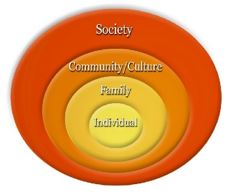
We want to provide insights and actionable reports on how businesses, law firms, pharmaceutical companies, hospitals, physician practices, non-profits, news media providers, retail stores, architects, engineers, insurance companies, manufacturers, airlines, city or state governments, or any other organization can get groups of people to work within the organization, area, or space for their mutual benefit.
Metromark® is based on scientific research methods. This may involve a variety of methods, including literature and media reviews, market opinion polling studies, market reports and studies, market research, market study and analysis of market studies, and marketing studies.
Other services include business advice and analysis of markets, market research and business consultation services in the fields of business, healthcare, health, manufacturing, and law — business and market research surveys, marketing consulting, marketing plan development, conducting consumer tracking behavior research and consumer trend analysis, mock juries and jury consultancy, law firm marketing, advertising evaluation, and social media effectiveness.
Listening
Every organization and individual has a story. The most important action anyone can take is to listen to those stories. Take, for example, someone who has an idea and wants to start a business — an entrepreneur.
An entrepreneur can be an 8-year-old girl who has been observing the world around her, listening to her teachers, reading articles and books, talking with her friends and parents, and studying successful and unsuccessful business and political leaders in her community.
She has an idea. It does not have to involve manufacturing a patentable product or technology. It could be a way for physicians and nurses to listen and respond to a person after admission to a hospital, who comes into the clinic, or who calls for advice and evaluation.
It can be a solution to a social problem. It can be a way to improve our society and relations with other countries. The young girl may have ideas on how we can reduce racial disparity, or like Greta Thunberg, how we can improve the environment.
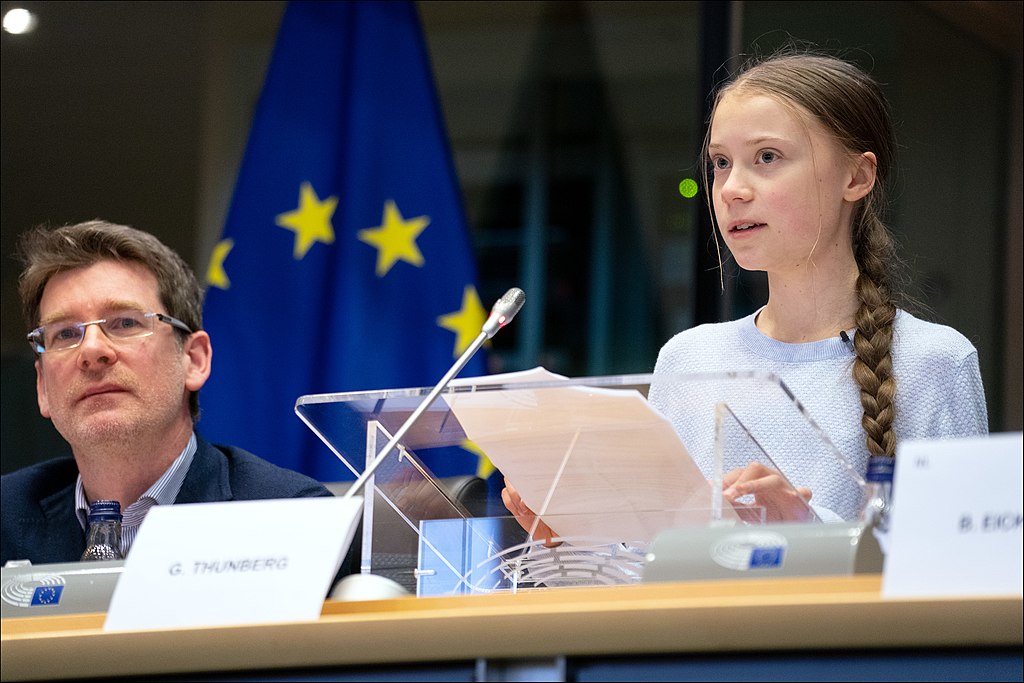
An entrepreneur creates a business, based on her knowledge, at a certain financial and personal risk, creates a reputation for solving problems with her knowledge, and finds people who will support her and pay her for access to that knowledge.
User Experience
One popular term today in market research is to observe, document and understand the “user experience“, sometimes noted as “UX”. This is simply observing and documenting what the “user” (resident, customer, patient, client, etc.) experiences when being, for example, in a store, in a building, in a city, on a website, as a client in a law firm, or as a patient in a hospital. Employees are “users” too. We need to look at the employees (associates, team, group). By knowing the user experience, that experience can be enhanced to improve satisfaction and improvement of the product or service.
Some questions that we often hear include:
How can we improve the health of people in the US and prevent illness, disease, injury, and premature death? How can we improve our hospitals, our physicians and our surgeons. How can we reduce the number of drugs, surgeries, and hospitalizations in the country. We need answers from everyone in our population.
How can we improve our neighborhoods and cities to keep people safe, healthy, productive, responsive, cooperative, helpful, and happy?
How should I respond to the needs of my employees, customers, and prospective customers?
What new products and services do my customers and employees want?
How can I improve customer and employee satisfaction?
What kind of logo and tagline do I need to tell the story of my company?
How can I be sure that my company has a good reputation as a corporate citizen?
How can I sell my idea?
How should I promote my products and services?
What are my target audiences?
How should I introduce my products and services to each target audience?
 What are questions you want answered? What are stories that you want others to hear? We will let you know how you can do research, on your own, in your organization. Or we work with you, as partners, in answering your questions. We learn from one another. It is a dialogue.

Methods we use may include identifying others who have or have had your same questions, using large database analysis, custom scientific surveys, literature review, secondary analysis, meta-analysis of multiple published research studies, as well as observation and qualitative studies, including charrettes, small group focused discussions, and one-on-one, in-person interviews.
Email us. Or use our contact form on this site. Metromark has two locations, Columbia, SC and a satellite location in Dallas, TX.
Photos: Metromark, Creative Commons
Go to Top of Page